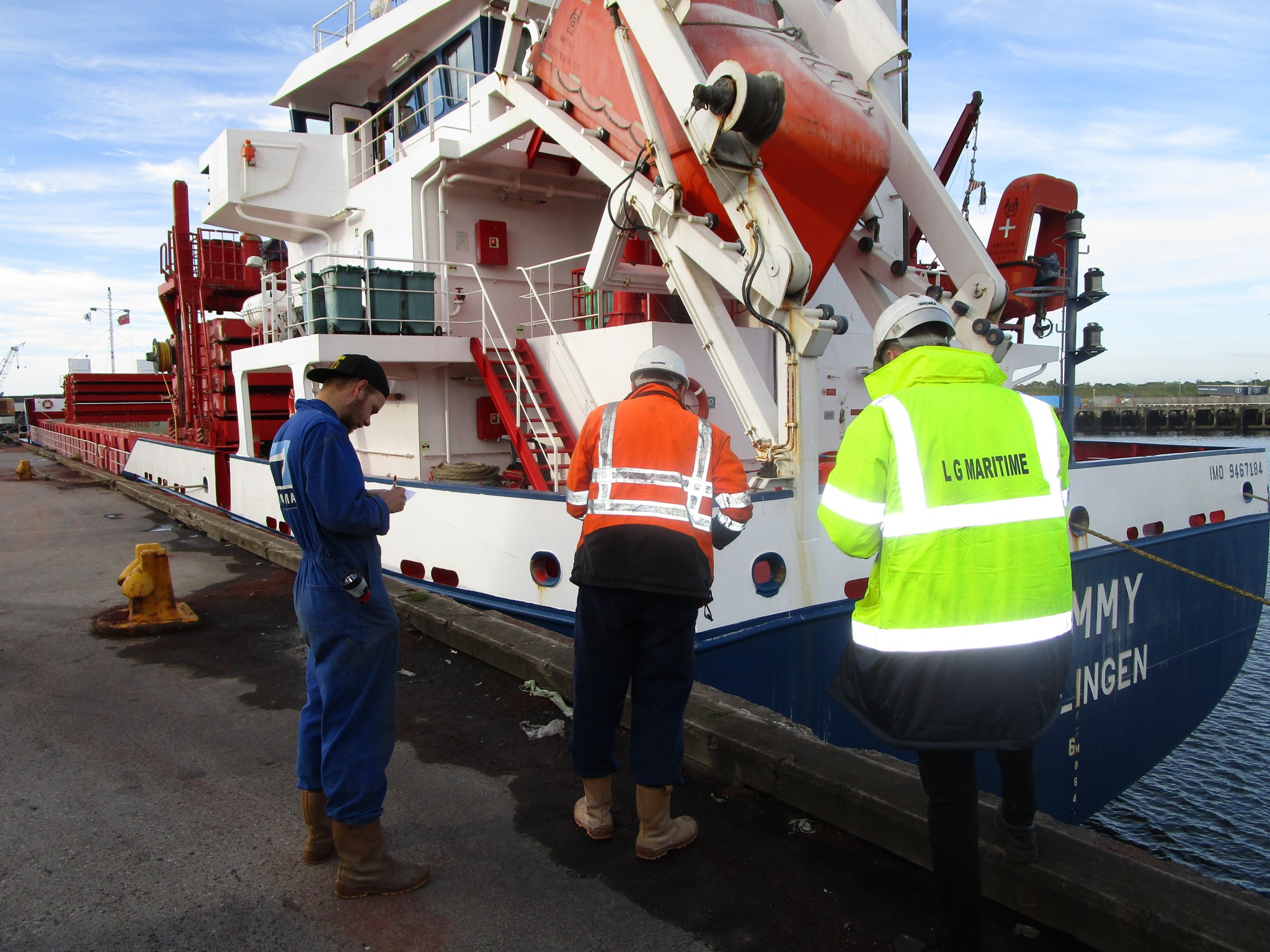
Draft Survey
Learn to determine ship cargo quantities accurately: from draught readings to a well-supported survey report.
A small reading error can make a significant difference to the calculated cargo weight. In the Draft Survey course, you will learn how to accurately determine the quantity of cargo loaded or discharged. You will practise taking draught measurements, applying corrections, performing calculations and preparing reports. The course consists of four training days, including the examination.
About this course
- Language
- Dutch
- Education Format
- Classroom
- Type
- Basic
General information
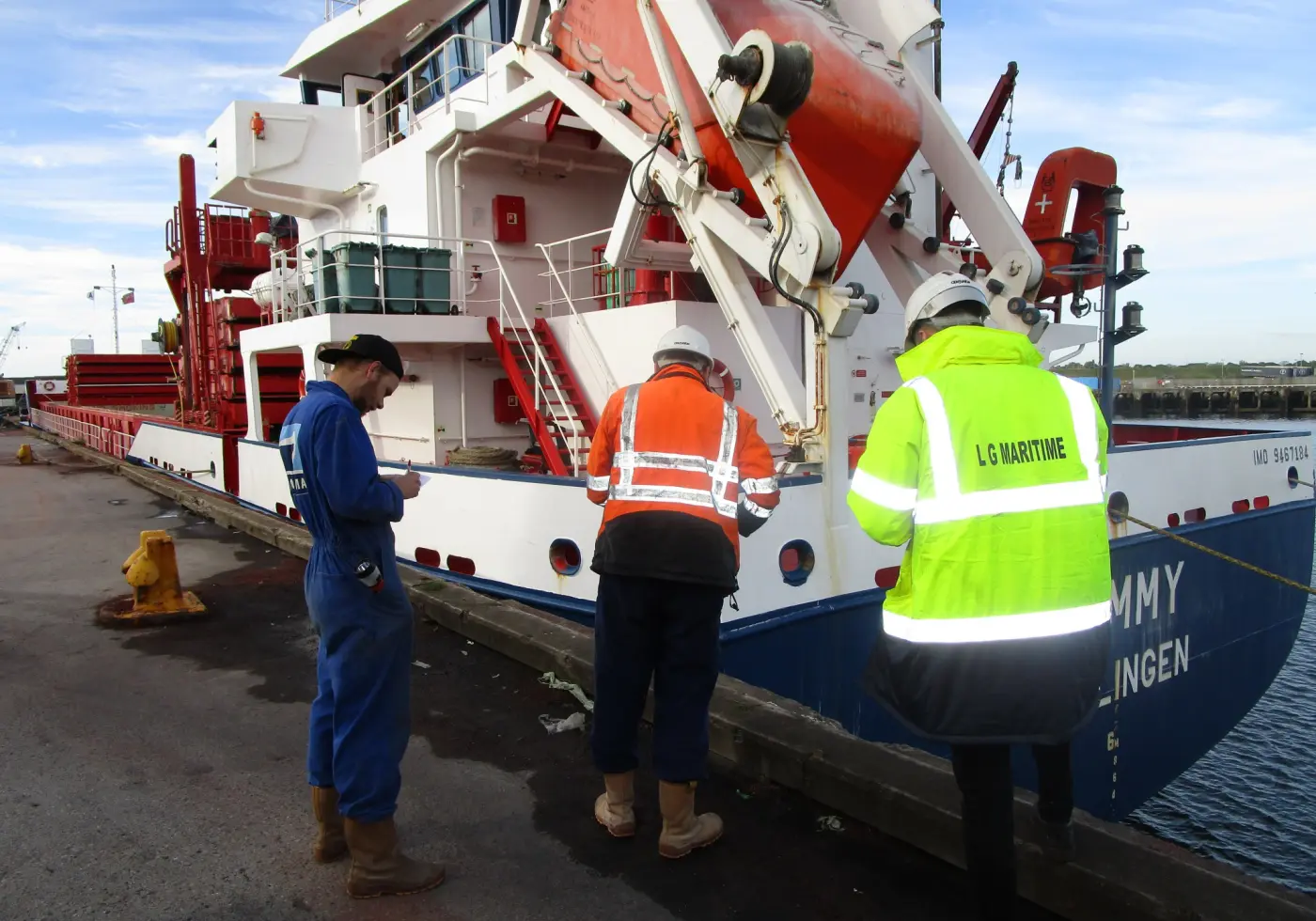
A draft survey determines the quantity of cargo on board a ship by measuring changes in its displacement. Accuracy is essential: depending on the vessel, a draught reading error of just one centimetre can result in a difference of tens of tonnes. This can lead to disputes over cargo quantities and financial claims.
This course teaches you to understand and carry out the complete survey process. You will work with real vessel data, calculation tools and practical examples. You will learn which factors influence the results, how to identify errors and how to justify your calculations.
Experienced instructors guide you in a small group, with time for questions and your own calculation examples. Course materials, calculation tools and the examination are included.
More about this study
Days 1–3 – Theory and calculations
You will progress step by step from the fundamentals of hydrostatics to a complete draft survey calculation. You will learn to:
Read draught marks and process measurement data.
Use vessel data and hydrostatic tables.
Apply corrections for trim and hull deflection, including hogging and sagging.
Account for water density.
Account for ballast, fuel, fresh water and the ship’s constant.
Identify sources of error and explain differences between calculations.
Present results in a clear, verifiable report.
Day 4 – Practical application
You will work through realistic cases and challenging measurement conditions, including waves, currents and poor visibility. You will bring together measurements, corrections and calculations, and learn to explain your decisions.
Day 4 – Examination
The course concludes with an examination in which you demonstrate your understanding of the knowledge and skills covered.
Courses
There are no available course moments within this study. Please contact our customer service team for more information about future course moments or alternative studies that may be relevant for you.
Questions about this course?