Facilities at STC Next
STC Next has a wide range of practice-oriented training facilities, simulators, and training locations. The simulators make it possible to practise realistic workplace situations safely and in a controlled environment, without disrupting daily operations.
Participants can train using recognisable scenarios from the maritime, logistics, and industrial sectors. This enables them to develop skills, decision-making, and teamwork in an environment that closely reflects real-life practice.
How we work
At STC Next, participants learn in practice-oriented environments that reflect the maritime, logistics, and industrial sectors. Our classrooms, practical training facilities, simulators, and training locations are designed to connect theory and practice effectively.
We develop and deliver education and training based on current sector developments, safety procedures, and operational practice. In this way, we prepare professionals to work safely, efficiently, and competently.
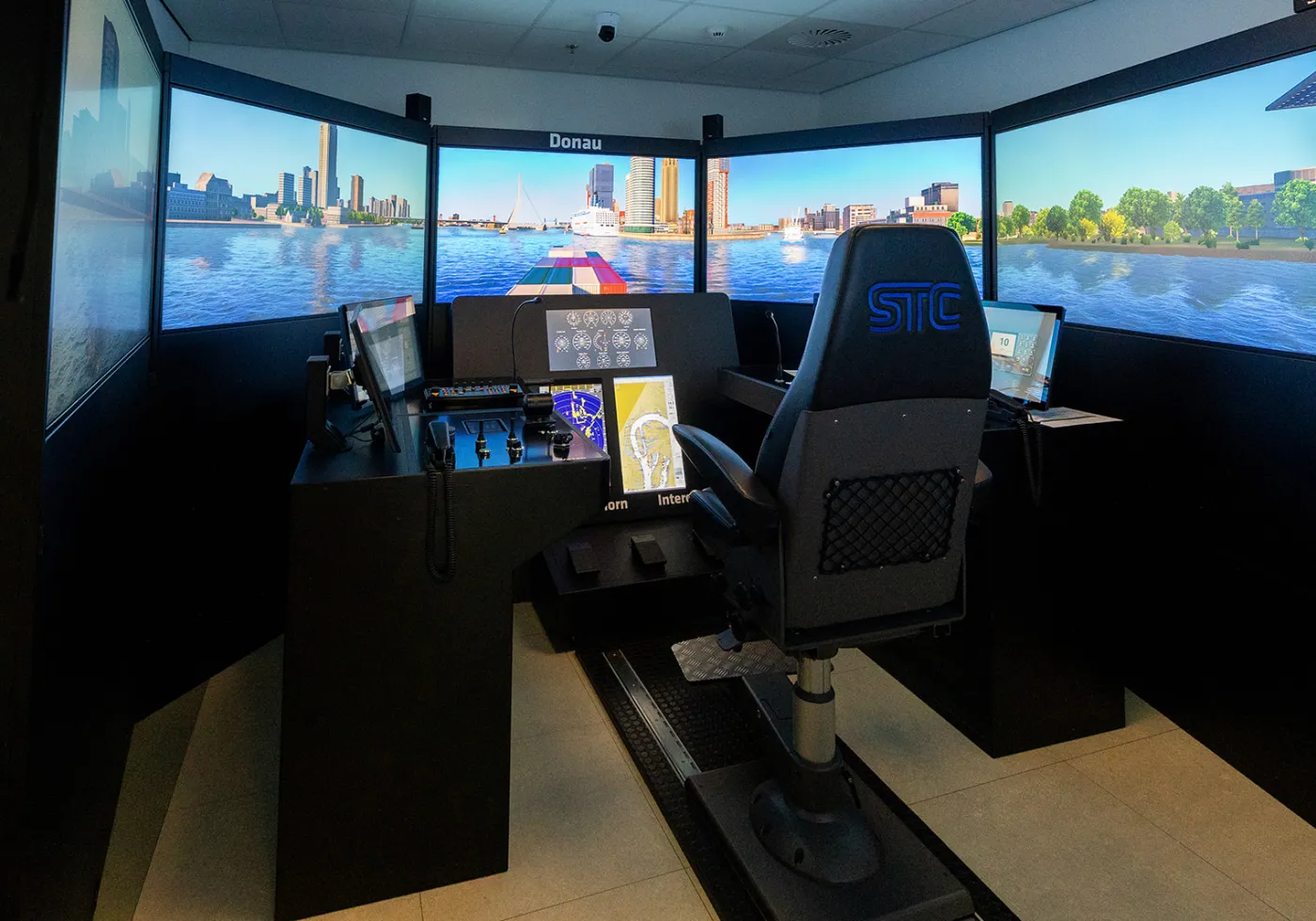
Learning by Doing
STC Next believes that effective learning starts with practice. That is why we use hands-on training methods, simulations, and realistic scenarios that prepare participants for situations they may encounter in daily practice.
Our facilities are also available for hire by organisations wishing to organise their own exercises, training sessions, or practical learning activities.
Would you like to use our facilities for your own training or exercise session? Please contact us to discuss the possibilities.
Our facilities
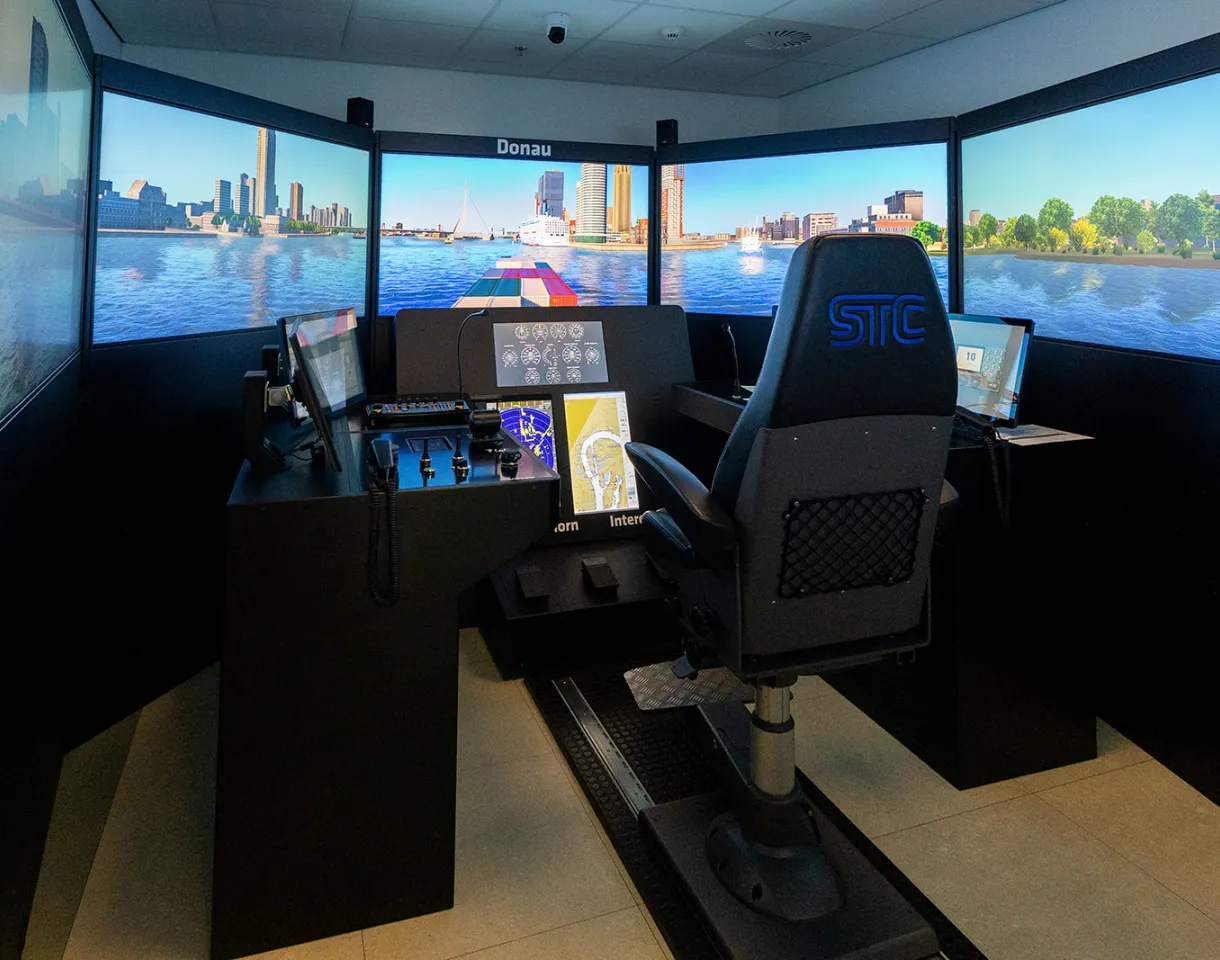
Full Mission inland shipping simulator
This unique, certified inland shipping bridge simulator supports a wide range of realistic training courses. It can be used for standard inland shipping certificates and radar courses, as well as training focused on damage prevention, safety, and communication.
Combined with our other inland shipping bridge simulators, LNG fuel training and standard boatmaster courses, we offer a comprehensive training solution for inland shipping crews.
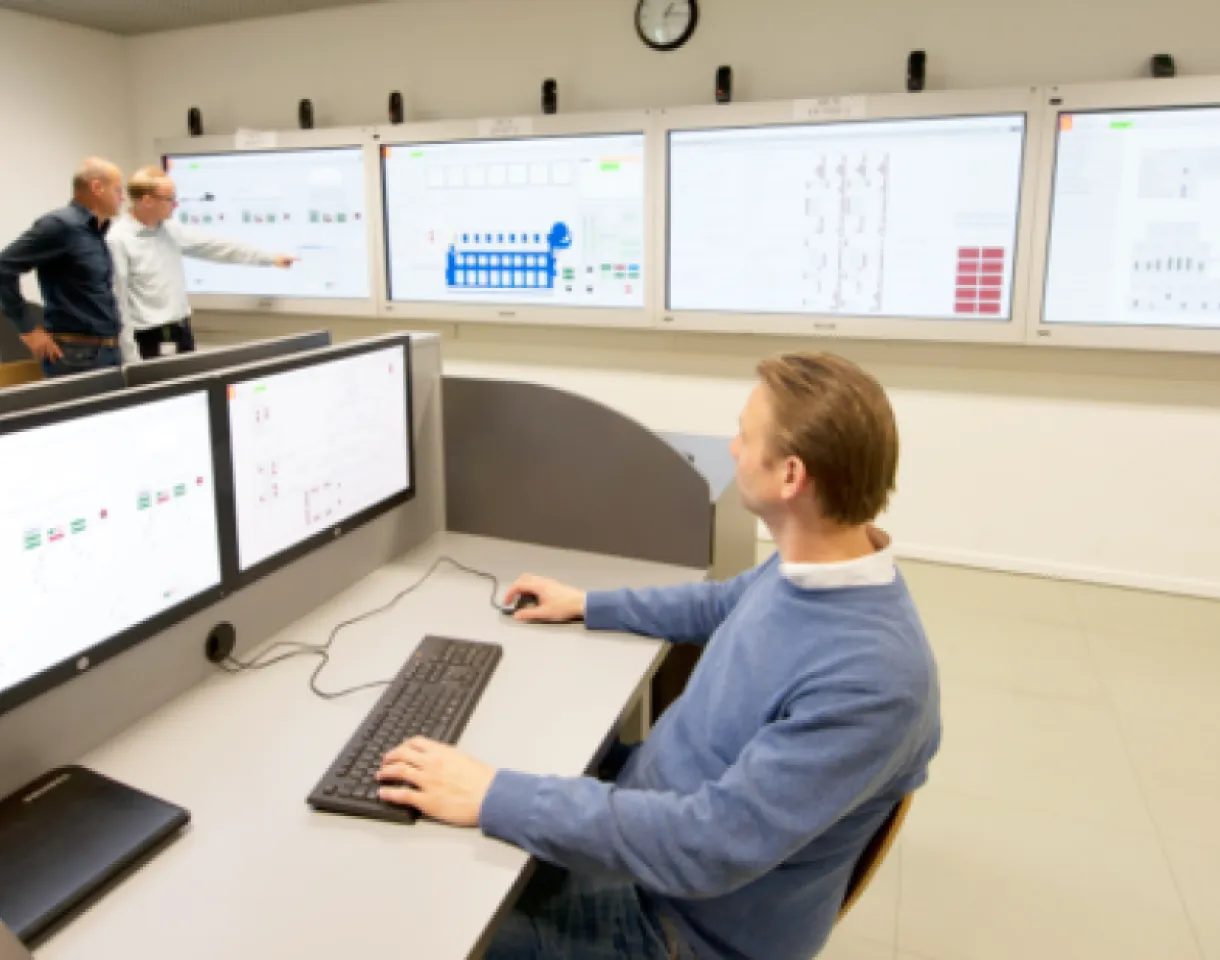
LNG bunkering simulator
We offer LNG bunkering training and courses using the LNG Dual Fuel simulator module for the K-Sim Engine simulator platform. In this engine room model, the focus is specifically on bunkering LNG-powered vessels.
Our advanced-level IGF Code courses include a bunkering procedure on the LNG simulator. This procedure is accredited by the Dutch Human Environment and Transport Inspectorate (ILT) and covers one of the three mandatory bunkering procedures required by STCW. The LNG Dual Fuel simulator, a Kongsberg model, is used to train this mandatory bunkering procedure in a realistic and practice-oriented way.
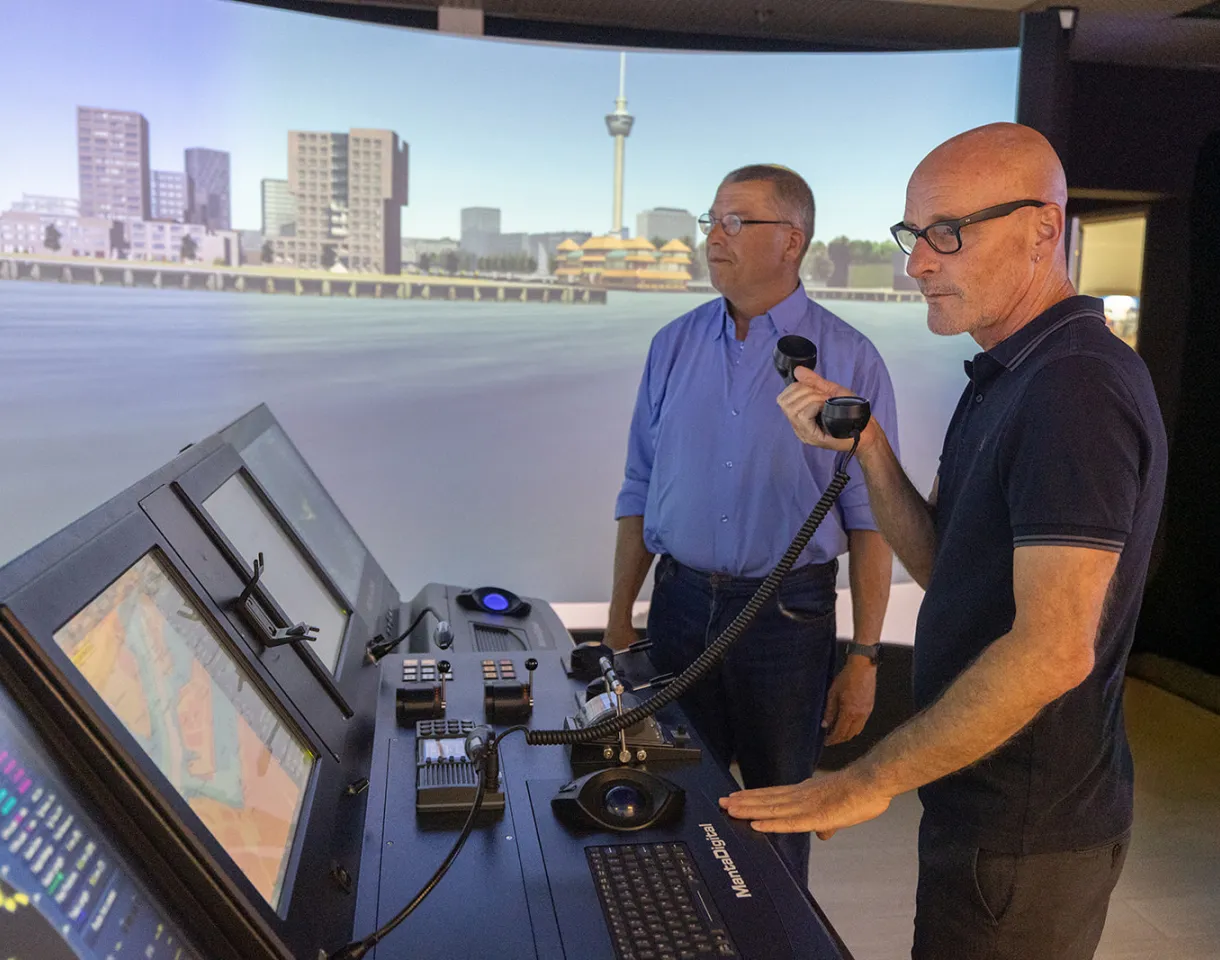
ECDIS simulator
Our Electronic Chart Display and Information System (ECDIS) simulator enables realistic training for bridge crews working with electronic charts. STC Next was the first approved institute in the Netherlands to provide official ECDIS training in compliance with the STCW Manila Amendments.
We can develop ECDIS training tailored to your organisation and provide type-specific ECDIS training using Transas, Maris, and Kelvin Hughes models. The ECDIS simulator is integrated into our Full Mission Bridge simulator to ensure a realistic training experience.
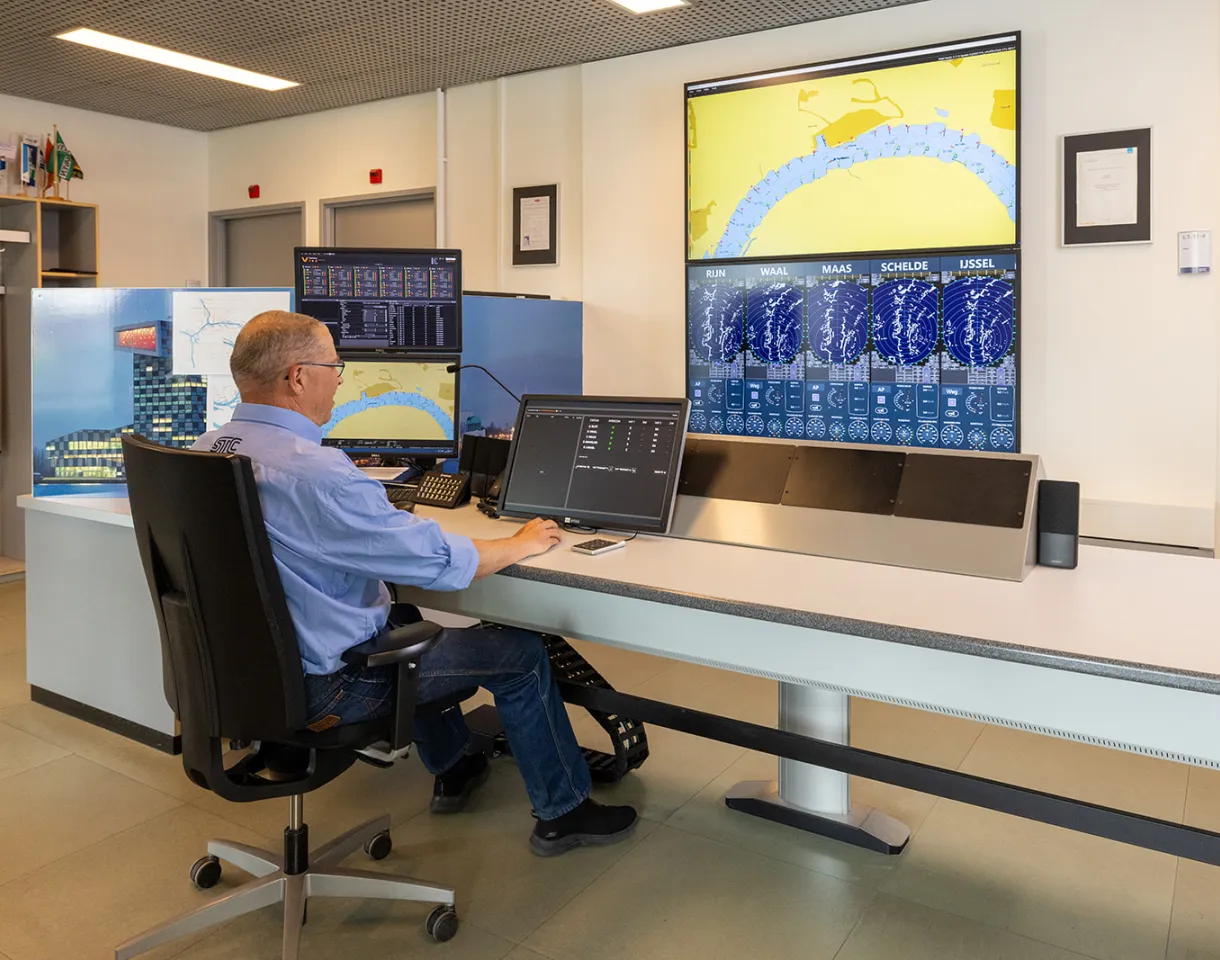
Inland shipping radar simulator
Our radar bridge stations are uniquely suitable for training multiple Boatmasters simultaneously.
Crew not only obtains acknowledged licenses and certificates, there is also a particular focus on realistic training in a wide array of challenging situations on rivers and canals, without risk of damage or casualties. Examples are near-misses in low-visibility conditions and cultural awareness. These can be combined with communication and language courses, as well as psychological evaluations, improving the skills of both new crew and highly experienced Boatmasters.
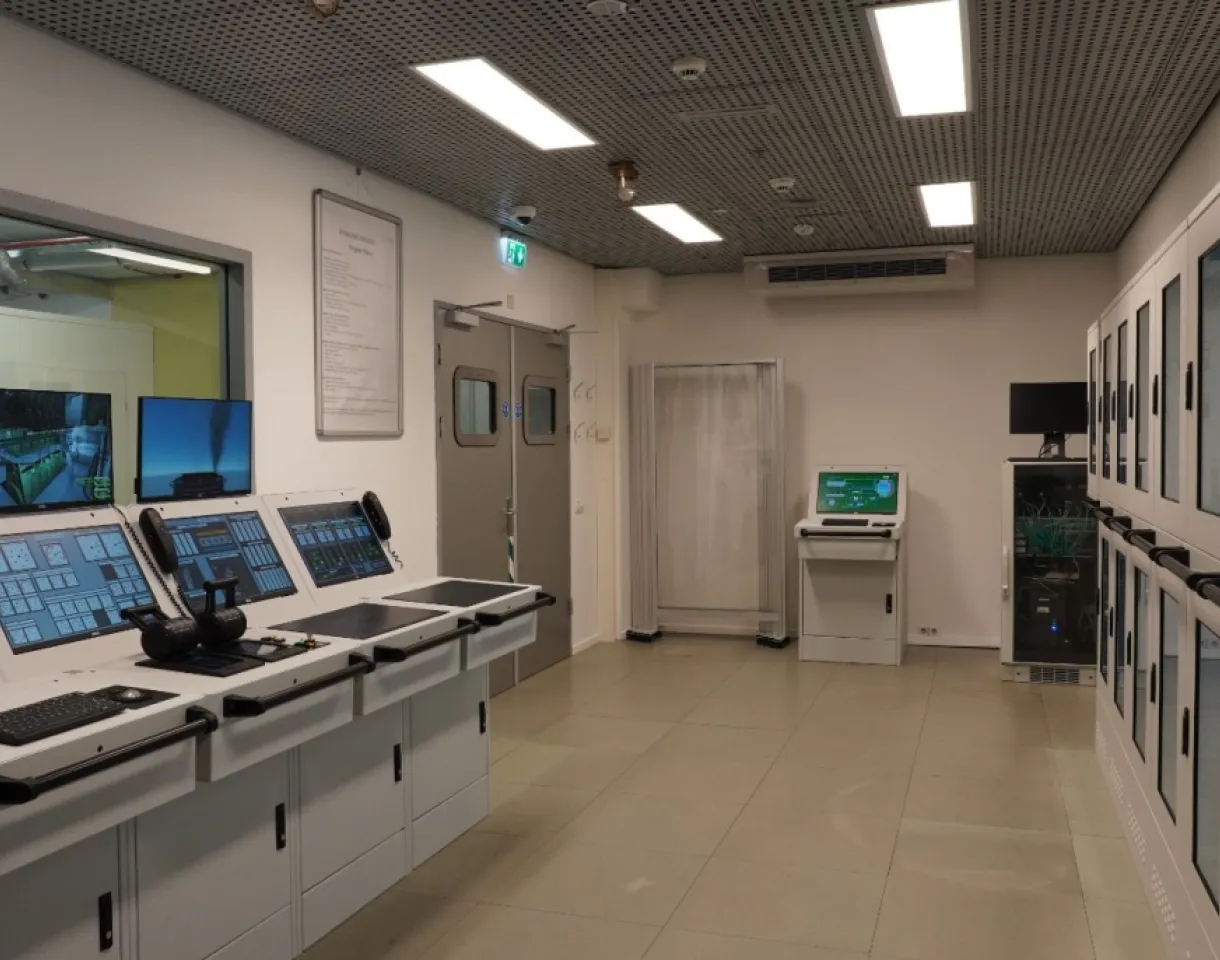
Engine room simulator
Our extensive engine room simulator boasts two floors, including the actual engine room, control room and (high voltage) control room. Additionally, there is a control room for the simulator operator. We offer a wide range of training in this simulator, such as start-up and shut-down procedures, resource management training, breakdown and other crisis situations, and communications training as well as psychological assessments.
This grand simulator allows for safe training of highly intensive situations. Whilst eliminating the risks of damage to equipment, the realistic environment gives crew the full experience of procedures and communications onboard a real seagoing ship.
We can complement training in the engine room simulator with real procedures in our actual on-land engine room facility and on board our training vessels. High voltage training in the engine room simulator can be combined with our actual high voltage training facility.
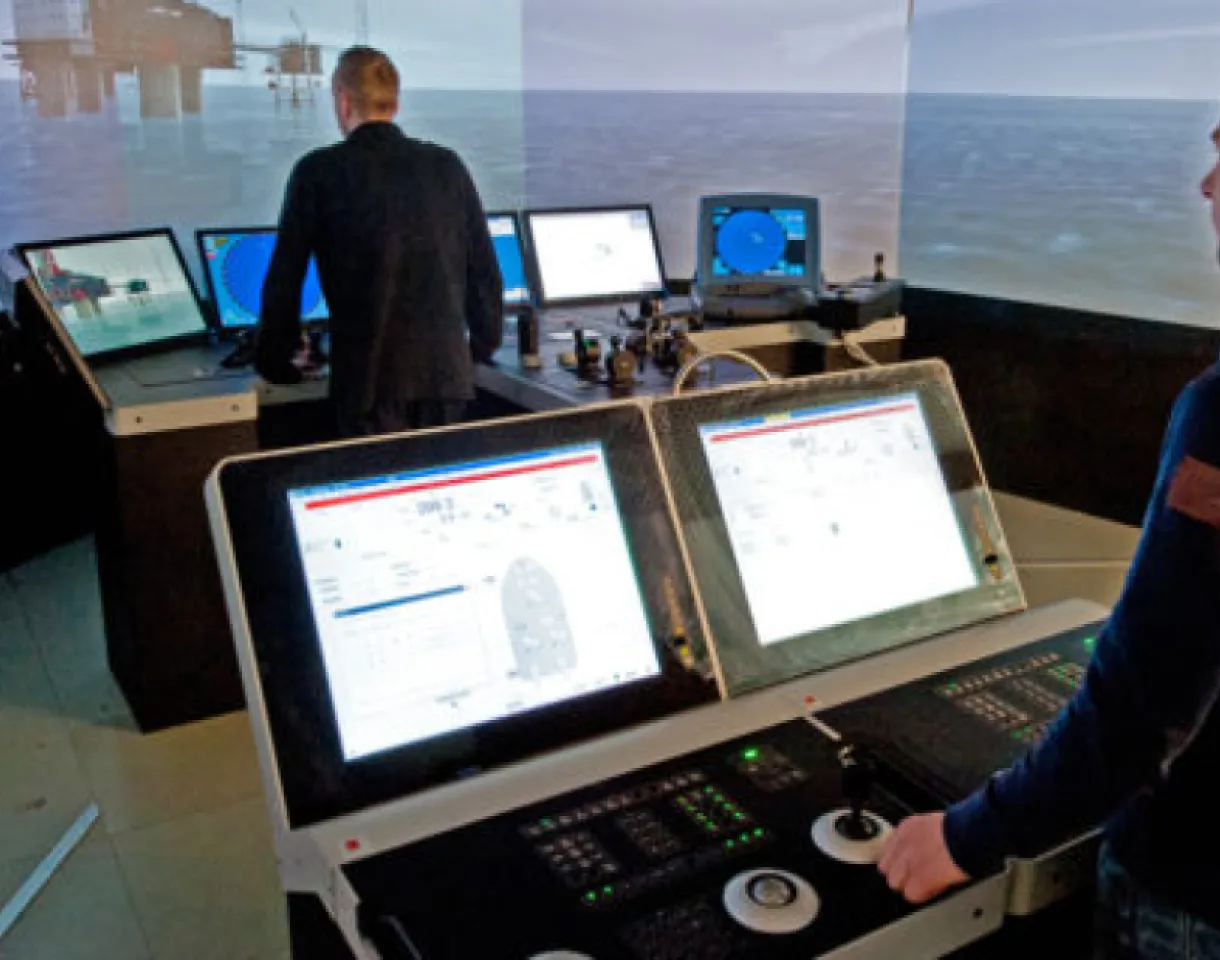
Dynamic Positioning simulator
We use our DP Simulator to provide Dynamic positioning training programmes that are accredited by The Nautical Institute (NI). Our consultants and development team can also tailor Dynamic positioning training to meet your exact requirements.
The simulator and surrounding facilities are regularly audited and allow for sea time reduction to acquire official dynamic positioning certificates.
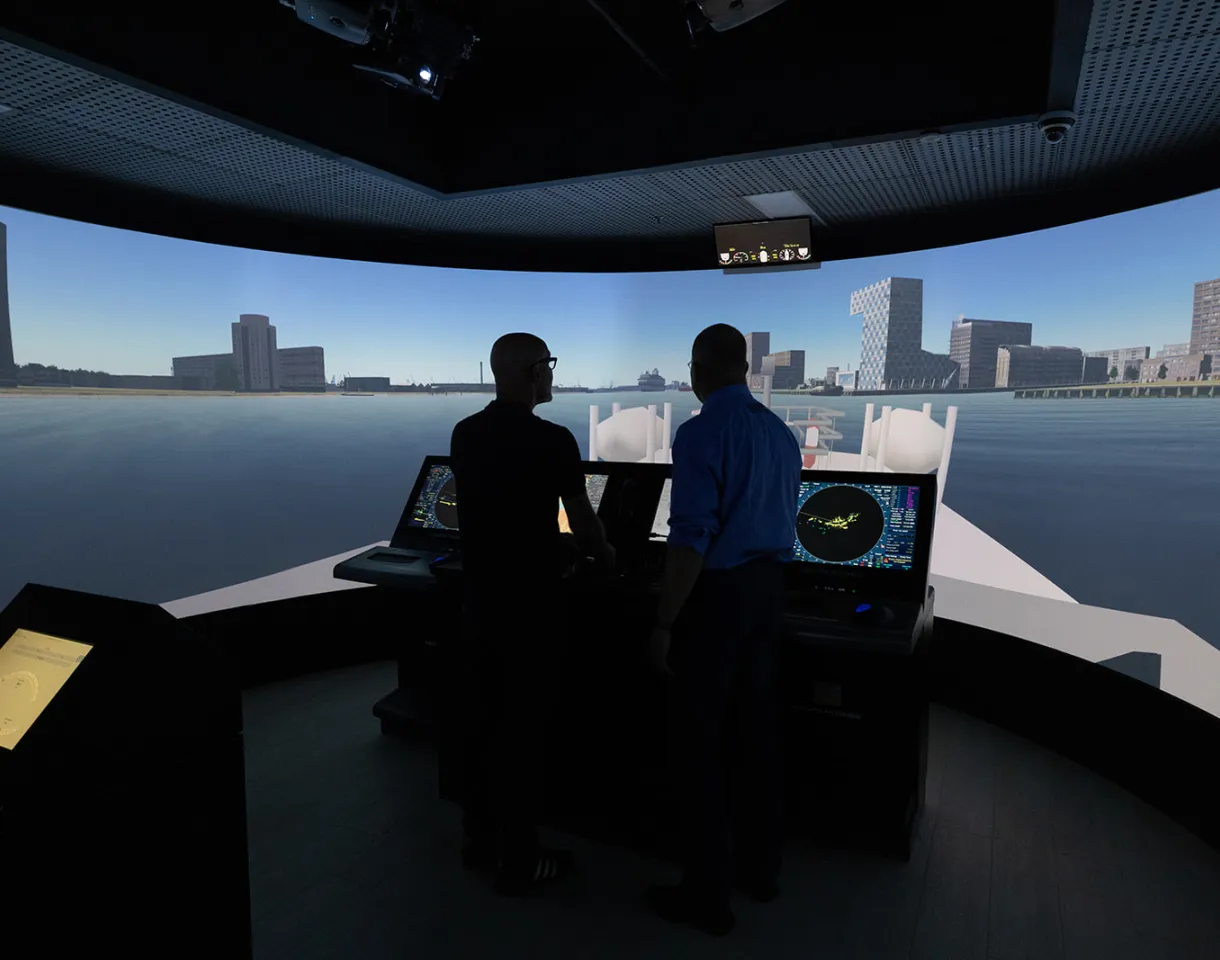
Full Mission Bridge simulators
Our full mission bridge simulators provide exceptional 240-degree views and offer numerous options in terms of ship models, weather conditions and port areas around the world. In addition to the wide range of directly applicable options, we have an in-house development team to tailor software to your exact needs and requirements. As we have multiple bridge simulators, we often welcome larger groups of crew for simultaneous training.
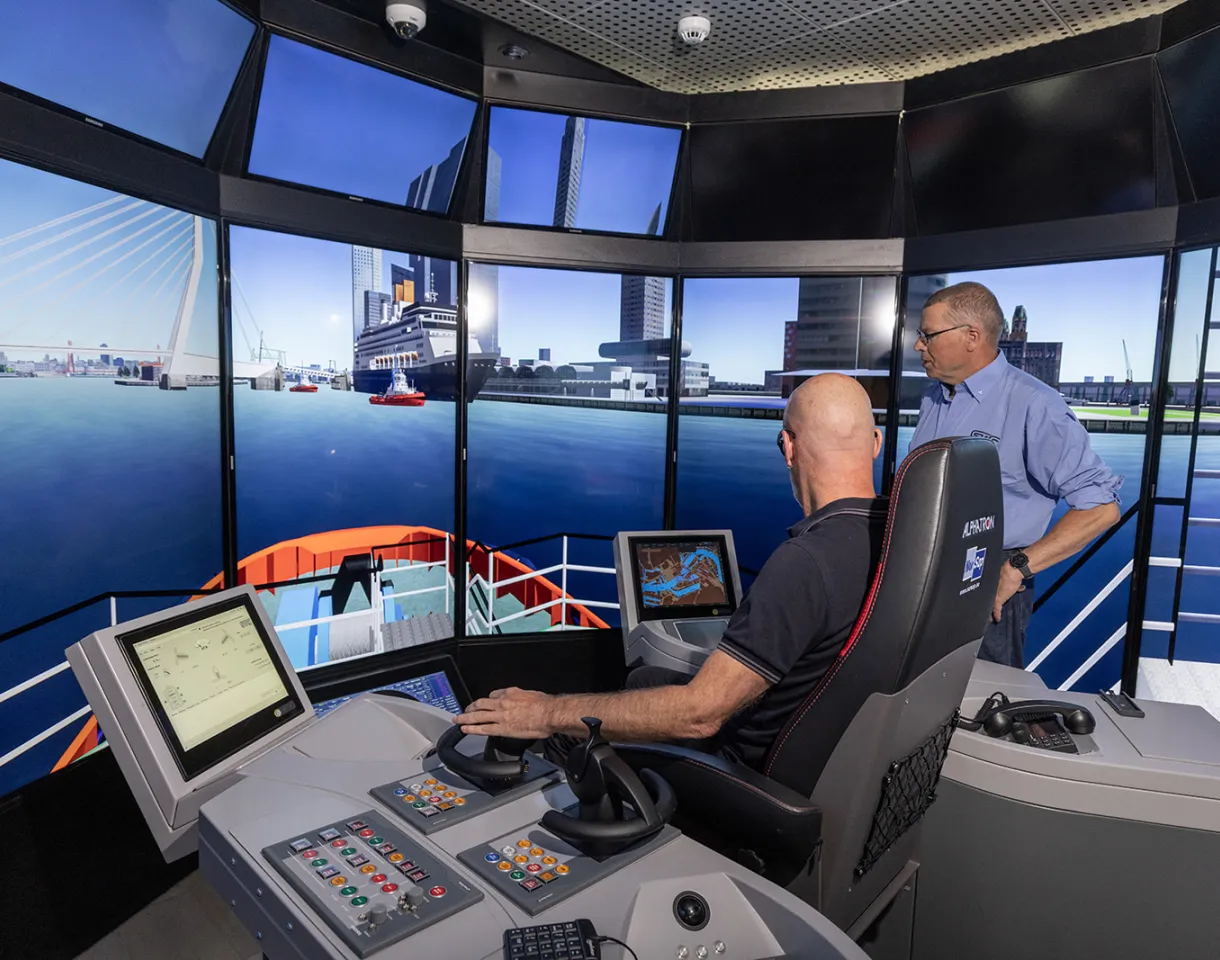
360-degree Tugboat simulator
This 360-degree tugboat simulator was developed in close cooperation with international towage service provider KOTUG. As a world first, we provide Rotortug simulation as well as a range of other tugboat models. An absolute Full Mission experience for Towmasters as well as Cruise Ship Masters, Pilots and port authorities.
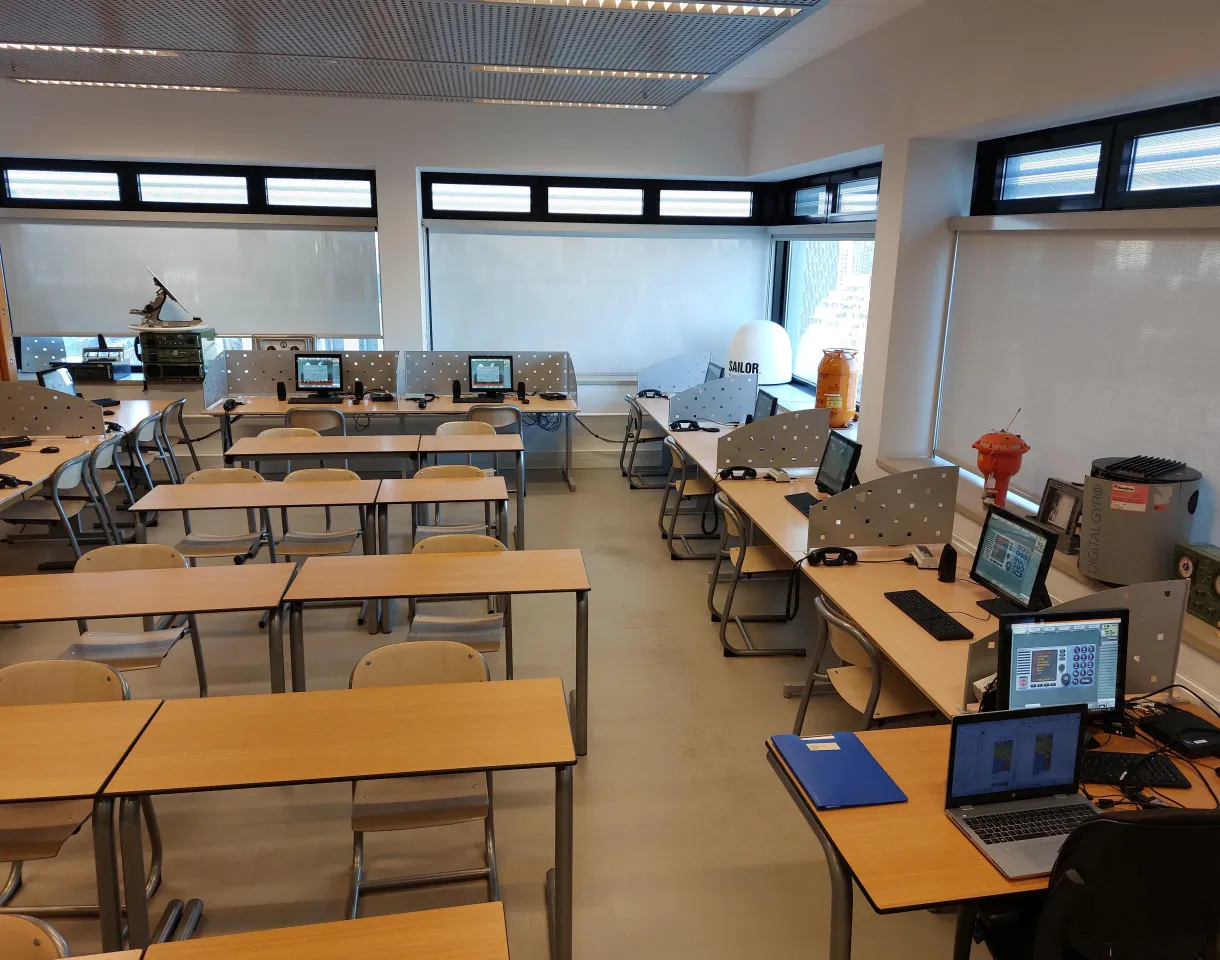
GMDSS equipment
An extensive range of GMDSS equipment is set up in the classroom. The equipment is ready for use and makes it possible to operate and compare different systems side by side.
You will work with several types of DSC equipment for VHF and MF/HF, various Inmarsat-C systems, Iridium, NAVTEX, Radar-SART and AIS-SART. Because different brands and versions are available, you gain a clear understanding of the differences in operation, menu structure, settings and functionalities.
The setup immediately shows what an action on one device causes on other systems or vessels. This creates a practical and realistic learning environment in which the operation of GMDSS equipment is the main focus.
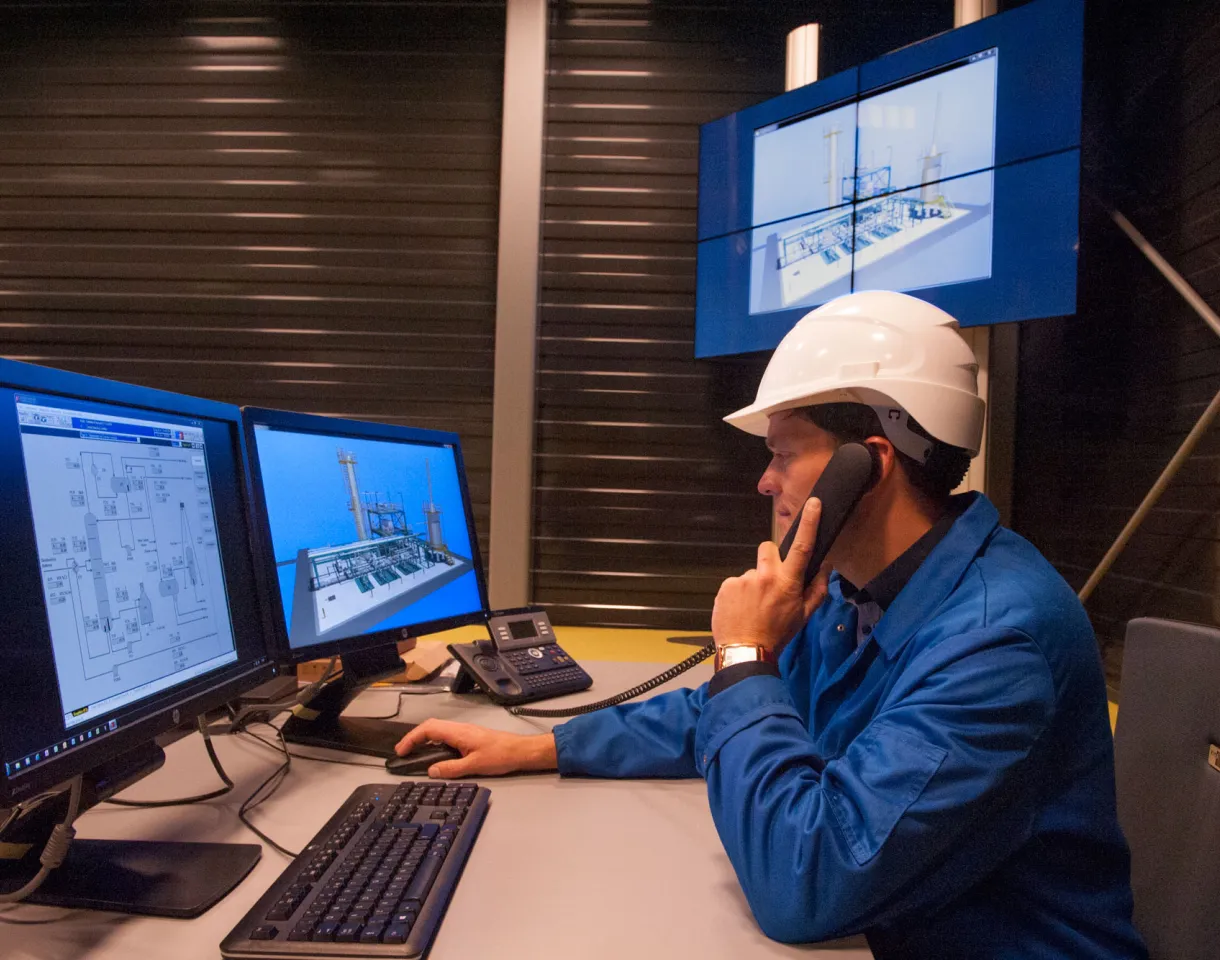
Emergency response simulator
The Emergency Response Simulator allows you to practise realistic industrial emergency situations in a safe environment. Through practical scenarios, participants train different roles, such as panel operator, shift leader and support services.
Teams practise emergency protocols, decision-making under pressure and clear communication. An occupational psychologist provides valuable feedback on teamwork, leadership and stress response.
This strengthens emergency preparedness and collaboration within teams.
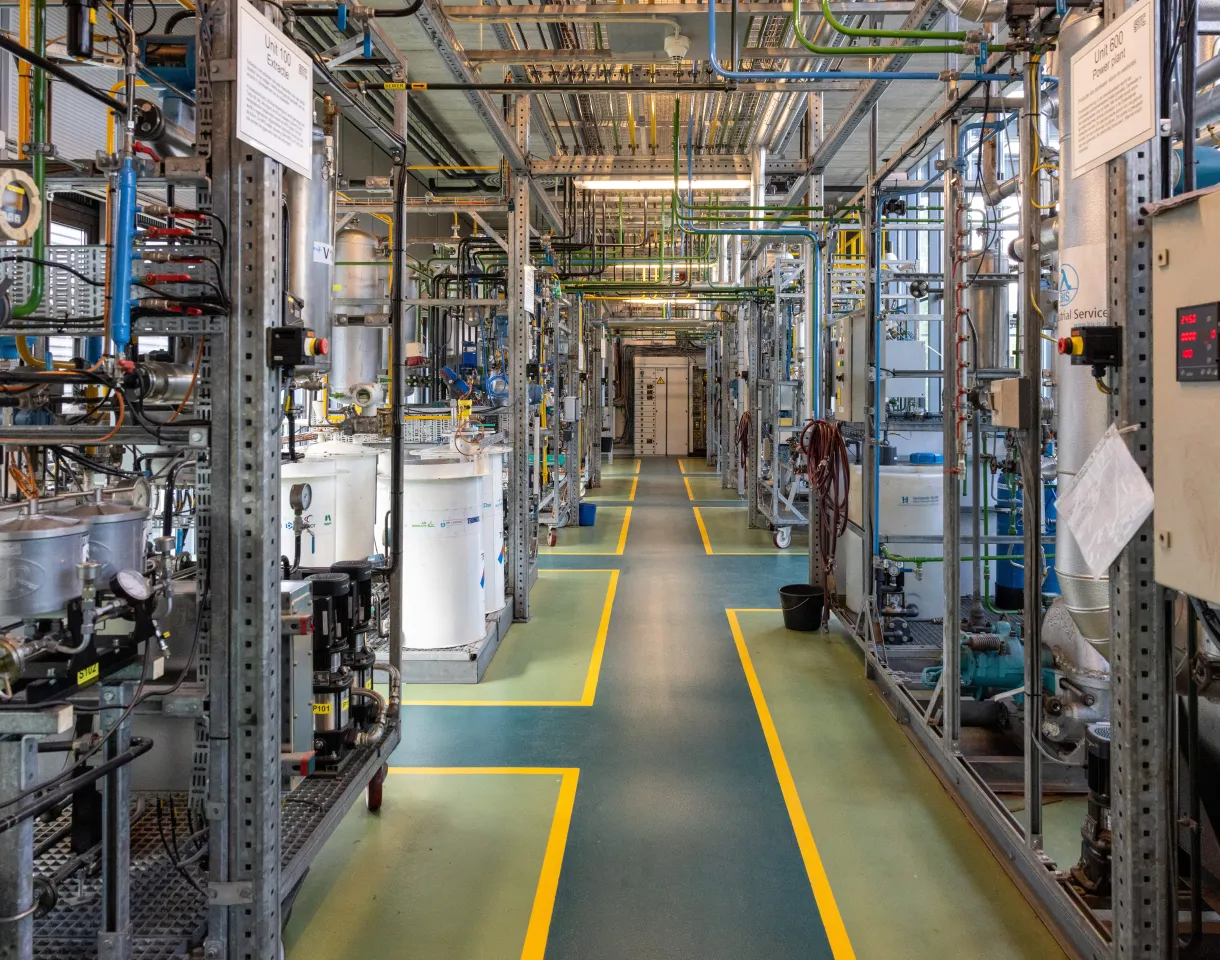
Training Plant
The training plant offers a realistic experience of working in a process environment. This fully operational chemical plant is equipped with common process industry equipment, including a reactor, steam boiler, distillation column, heat exchangers, pumps and tank storage.
Participants practise operating, monitoring and adjusting machines and processes. From a modern control room, realistic situations can be simulated and various scenarios can be tested safely.
This provides practical training that closely reflects the day-to-day reality of the process industry.
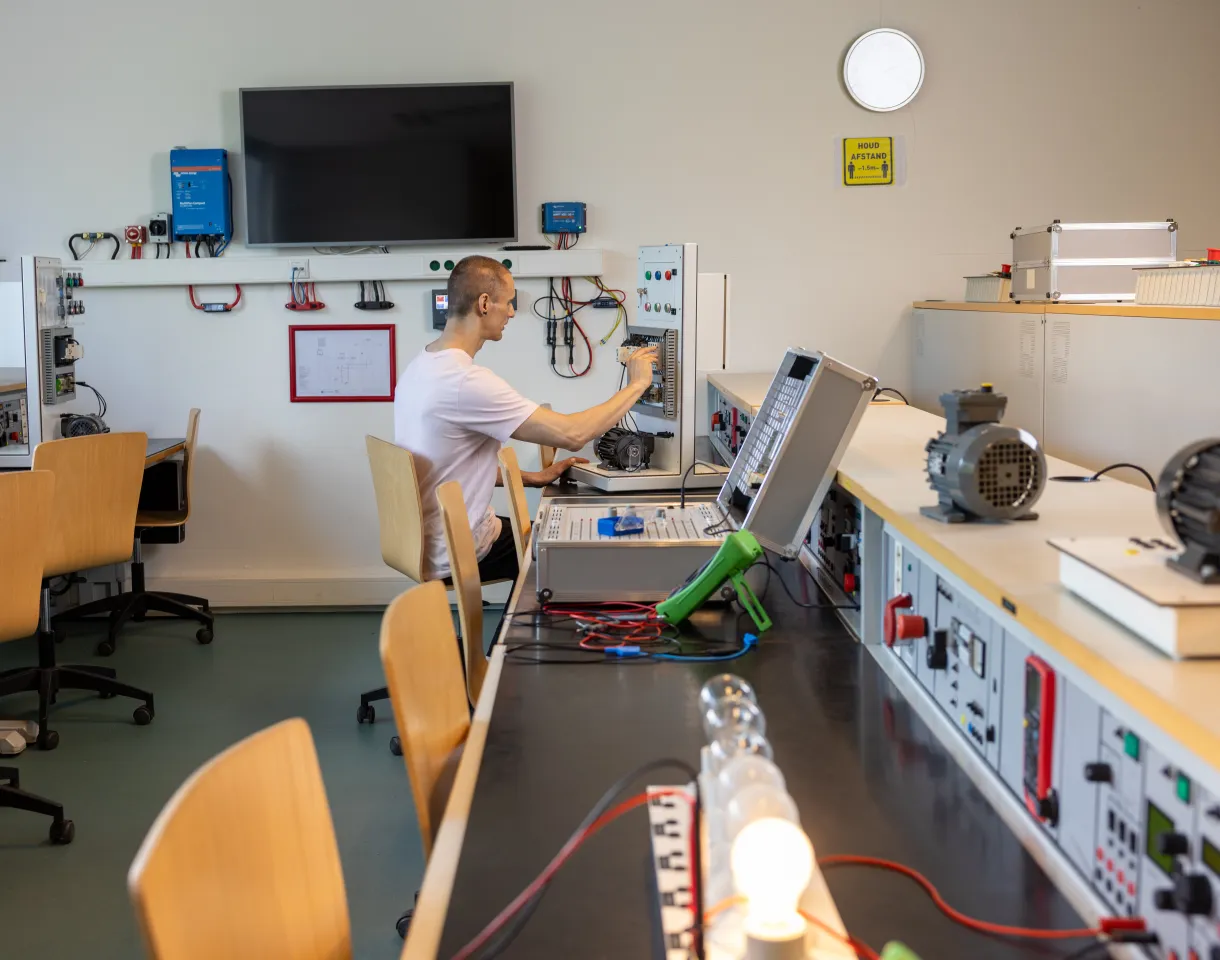
Electrical Simulation Lab
In the Electrical Simulation Lab, participants practise working with electrical installations similar to those used on board vessels and in industrial environments. The lab is equipped with the technology needed to safely and realistically simulate a wide range of practical situations.
Participants work with measurement and control technology, PLC technology and electrical systems for operating, monitoring and analysing installations. This helps them develop practical skills that can be applied directly in maritime and industrial settings.
The Electrical Simulation Lab provides a safe learning environment where theory and practice come together.
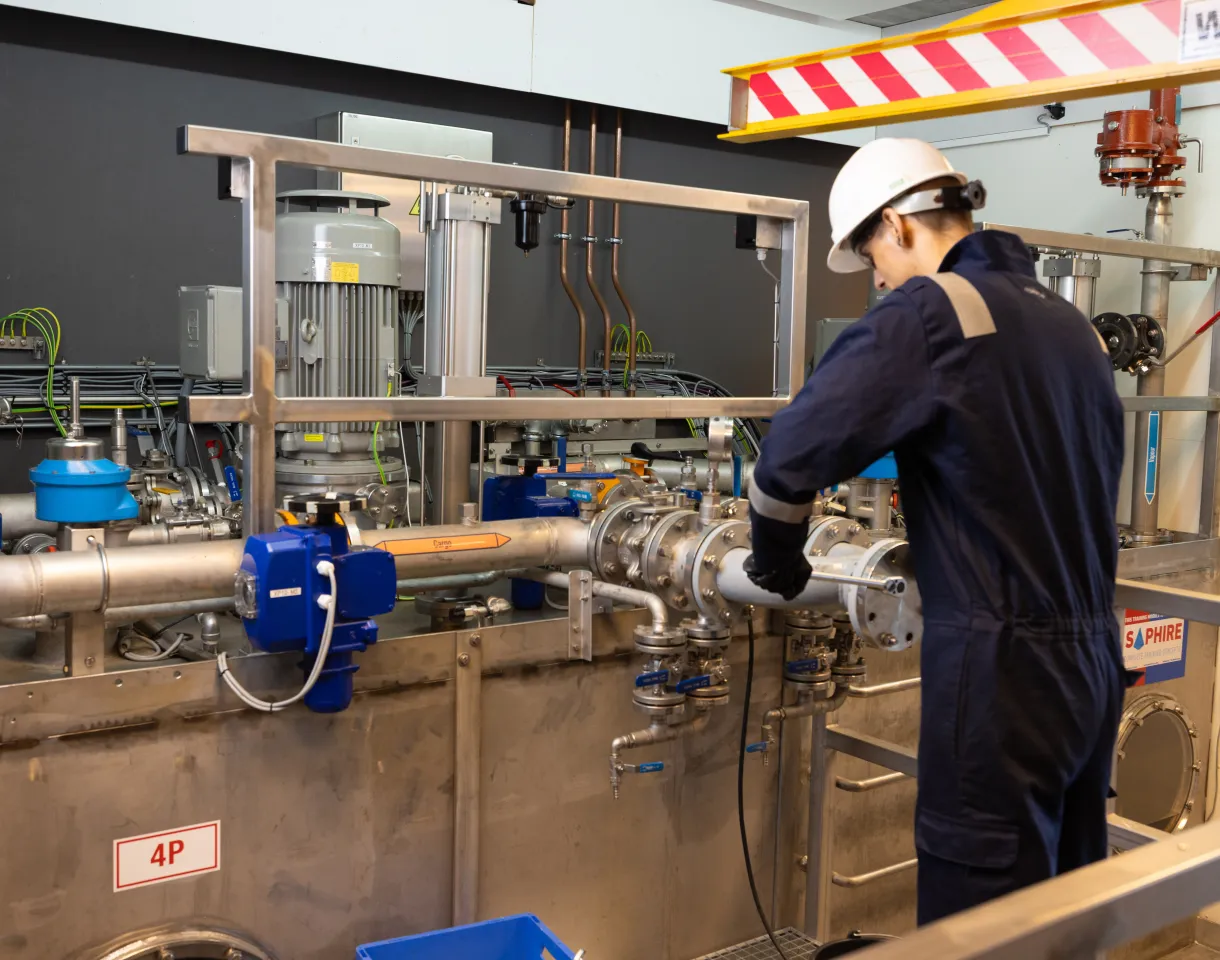
Tanker Training Facility
In the tanker training facility, participants practise working safely with liquid cargo. They train activities such as gas and water analyses and the transfer of liquid cargo from seagoing vessels or inland tankers to storage tanks.
The facility offers a realistic learning environment focused on procedures, installations and safety aspects within tanker shipping and the LNG sector.
Recognised and Certified
Our simulator facilities, training programmes, and instructors comply with relevant national and international guidelines and quality requirements. Training programmes and facilities are regularly reviewed and, where applicable, audited by recognised authorities and industry organisations.
We work within the frameworks of international standards and guidelines, such as STCW requirements, ISO standards, IMCA guidelines, and CBR requirements for relevant certifications. For specific training programmes, such as Dynamic Positioning, we follow recognised frameworks such as those of The Nautical Institute.
These recognitions, audits, and partnerships ensure that our training programmes, simulators, and assessments are aligned with current requirements, international professional practice, and safety standards.
Do you have any questions about our simulators or the possibilities for training and tailor-made solutions? Please feel free to contact us.
Want to know more?
Education advice and contact